
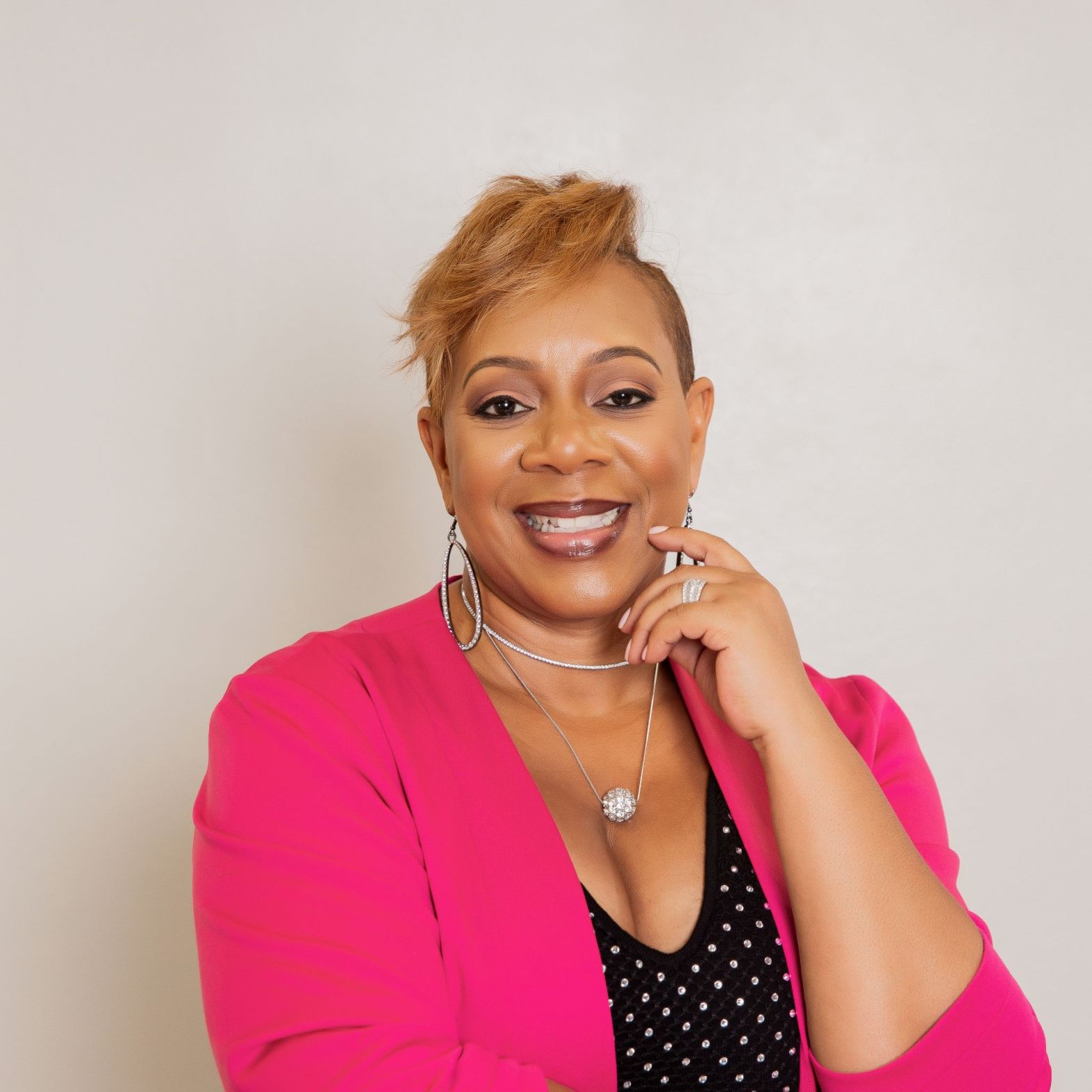
Kelly Charles-Collins, Esq., Unconscious Bias Expert
July 2021
When Kelly Charles-Collins walked into the courthouse each day, she was regularly asked, “Are you the court reporter? The assistant? The probation officer?”
She was none of these. Kelly was a partner in a Florida law firm and an employment attorney for more than 20 years. Yet, despite being a smart, strong-minded black woman working in the legal profession, she faced discrimination throughout her career.
It’s a story told millions of times over – not just in corporate America, but around the world. In response, though, Kelly chose a unique path.
She could have stayed in the legal profession and continued her successful career. But she felt her purpose was something greater.
“With my experience in the corporate world, I wanted to make change how people interact with me as a black woman, and more importantly my son as a black man.”
So she left the legal profession and now seeks to educate business leaders and employee groups about the issues that will create positive working environments – and keep business leaders in the boardroom and out of the courtroom.
Disrupting people’s unconscious biases
Since the murder of George Floyd in May 2020, diversity and inclusion has become the buzz phrase for corporate leaders. But Kelly believes that diversity and inclusion is not the problem: it’s a symptom of a more pervasive underlying problem – the problem of unconscious bias.
“The decisions we all make are based on the things we think and the way we feel about people. There’s a fine line between unconscious bias and discrimination. I want to disrupt the thinking that led to so many of the cases I ended up working on.”
Unconscious biases are the stereotypes we attribute to other people. Black, white, male, female, British, American, teens wearing hoodies, men wearing pinstripe suits, police officers, men wearing red caps, and so on: our brains all make rapid assessments of people based on our life’s experiences.
We all hold these biases; it’s simply how the brain works. As an unconscious bias expert, Kelly’s work focuses on disrupting people’s thinking in this area: to be aware of these biases and rewire the brain to minimise them.

The leader’s role
It all starts at the top. Kelly believes that leaders are accountable for creating a safe space for everyone. This helps break down unconscious bias and helps build up a truly supportive working environment. Leaders have to buy into the fact that this is an important issue. It impacts at all levels of an organisation. And it’s not just about work: it’s about real-life issues too. Whether you like it or not, people bring their personal lives to work every day – sometimes out loud, sometimes in silence.
But why does it matter? As Kelly says so powerfully, “It shows that you give a damn.”
Kelly passionately believes that companies can and should balance people and profit. She’s realistic and understands that companies need to make money. But they can’t do so at the expense of their people.
Digging a little deeper, Kelly talks about the different cultures within a firm. The macro culture is the one we all know – the one driven from the top down. It’s filtered, it’s sanitised and it’s intended to be the outward expression of what a company stands for.
But within teams and companies, there are also micro cultures. These are not led by the supervisor of that team; the culture is led by the employees themselves. These are the watercooler moments, the lunch break chats, the unfiltered email exchanges. These are the cultures that make or break an organisation.
Conversations within these micro cultures will always exist. Employees will always talk to the people they feel safe sharing with. And leaders, managers, HR representatives and supervisors will always be excluded from those cultures unless the employees feel safe to speak their truth.
So how do leaders create safe spaces?
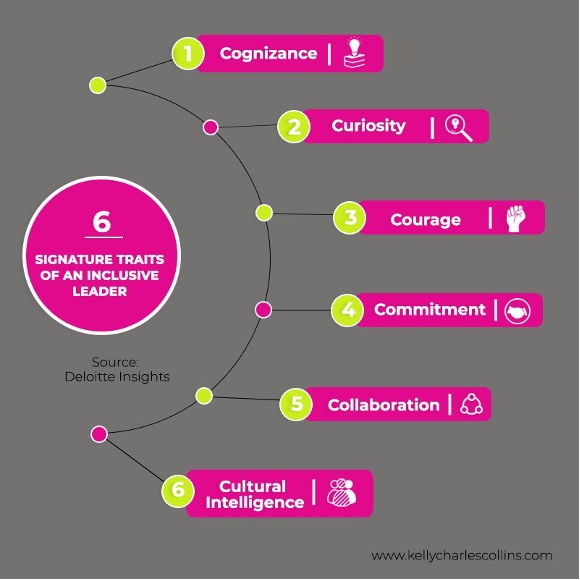
There are various tactics leaders can use to build that level of trust. Deloitte talks about the six signature traits of an inclusive leader (check out the graphic below). Kelly hones in on cultural intelligence:
“Understand that people are different and come from different places. People don’t always turn up to work the same way. For example, the day after George Floyd was murdered, have the awareness to ask ‘how are you doing?’. Make space for Muslim colleagues to pray. Create breastfeeding spaces for new mums. Be conscious of people in your teams whose partners may have lost their jobs. Be empathetic. Really, just ‘giving a damn’.”
Kelly considers herself to be a safe space. Yes, a person can be a safe space. She experienced that first hand back in her life as an attorney. While all the other partners in her firm had wooden doors on their offices, the wall to her office had a glass door and a large glass window.
People from across the firm would come into her room every day and share their stories, make complaints and unload their fears.
And why did they feel that Kelly was someone they could trust, even though she was a partner in the firm and could hold it against them?
She was seen as a safe space. She always kept their confidentiality. She hung out in the lunch room. She asked how their families were doing? She was respectful of everyone in the organisation, regardless of what they do.
She cared. Her colleagues felt supported, so they trusted her. Basically, she gave a damn. And that’s the one revolutionary tactic leaders can take away from this: give a damn.
 theleadstory.co